Medical Education AR Application

Case study

Medical Education AR Application

aruiuxBy Jackson Barnes

Developed an AR educational platform for a biotech company's research team, using volumetric capture, 3D animations, and spatial data to help thousands of employees understand complex disease research.

I created an AR educational experience for a research group inside a major biotechnology company. The group specialized in five disease areas and wanted to make its work more visible and understandable to colleagues across the organization.

Communicating the Research

The experience combined augmented reality, volumetric capture, spatio-temporal data, and 3D animation to present complex disease research in an engaging format. It brought information about the specialist group's work to thousands of people inside the company.

The case-study slides below trace the work from research and concept exploration through interface design, development, and presentation to the client.

Application Demonstration

Watch the application video

Case Study Slides

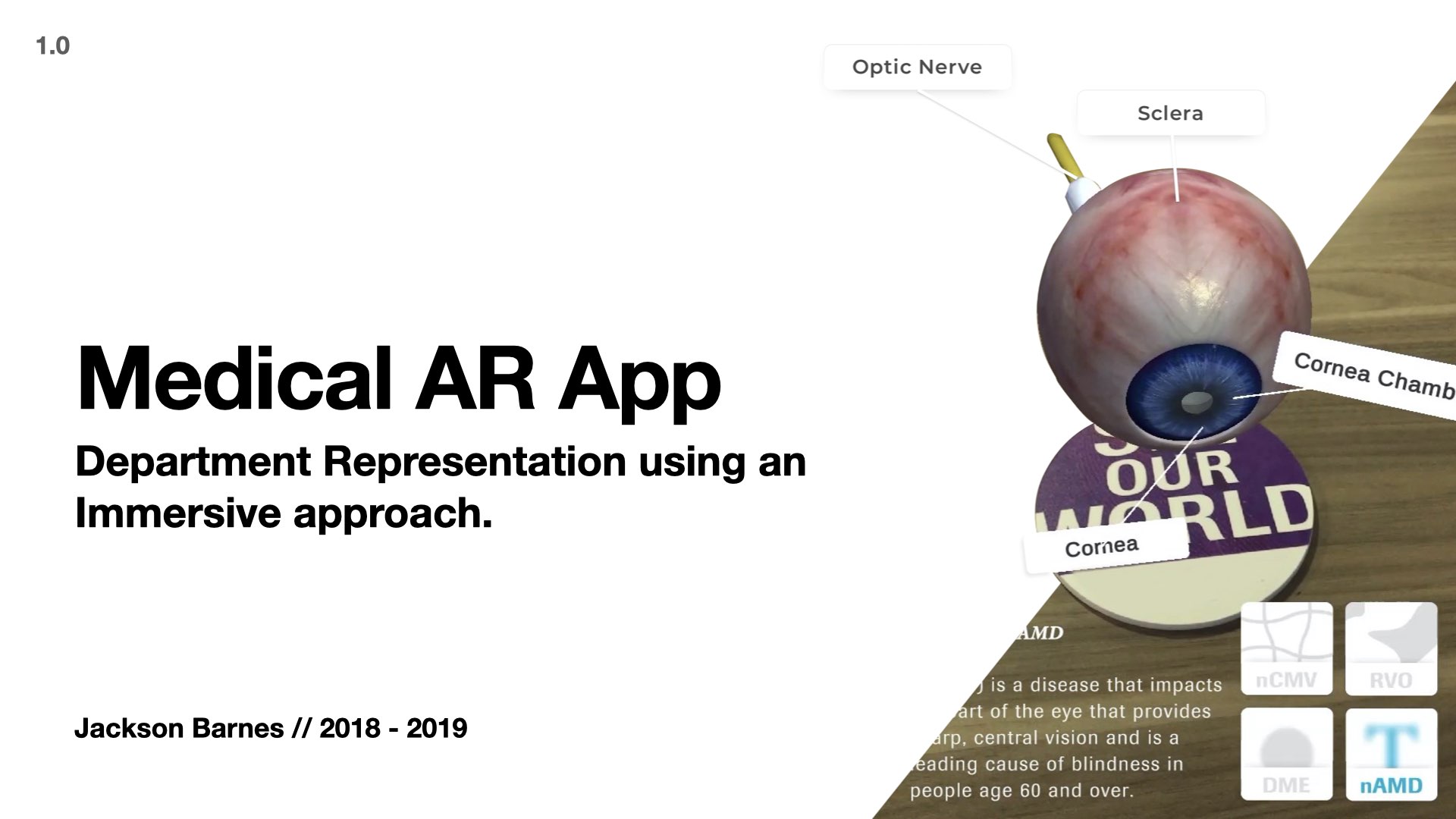
Medical AR application case-study cover with an eye model and mobile interface
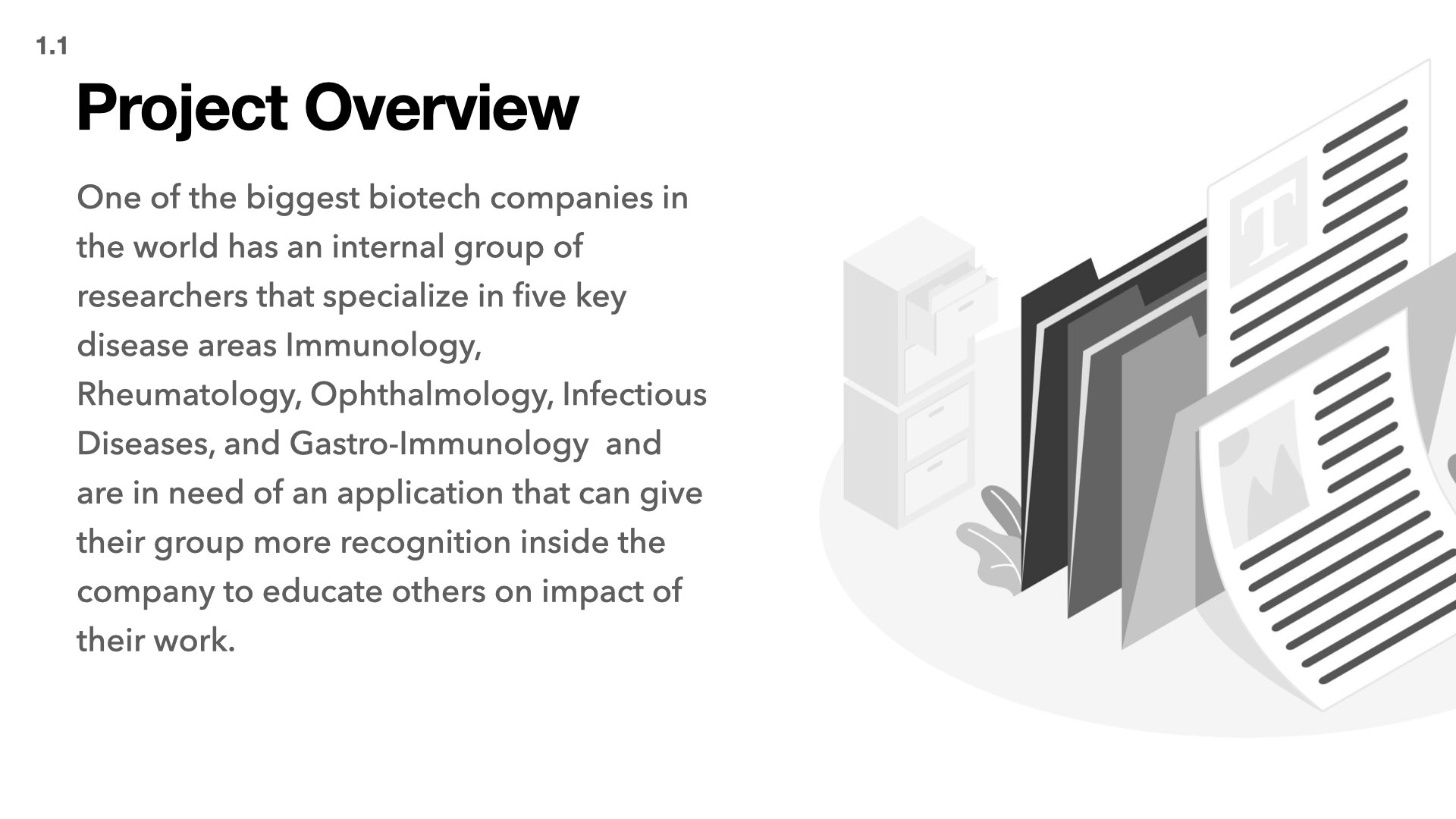
Project overview describing the internal research group's communication needs
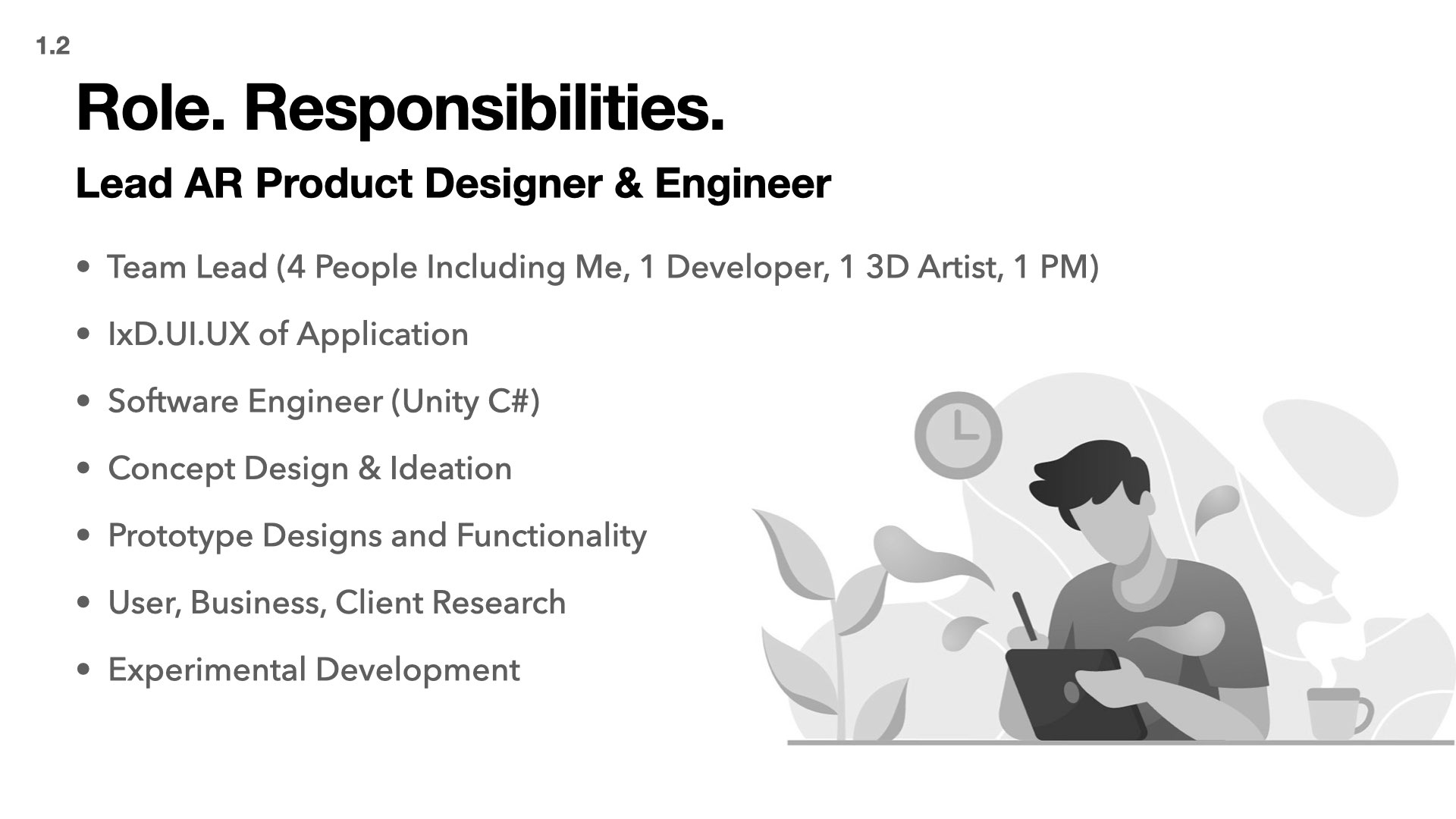
Role and responsibilities covering AR product design, engineering, research, and team leadership
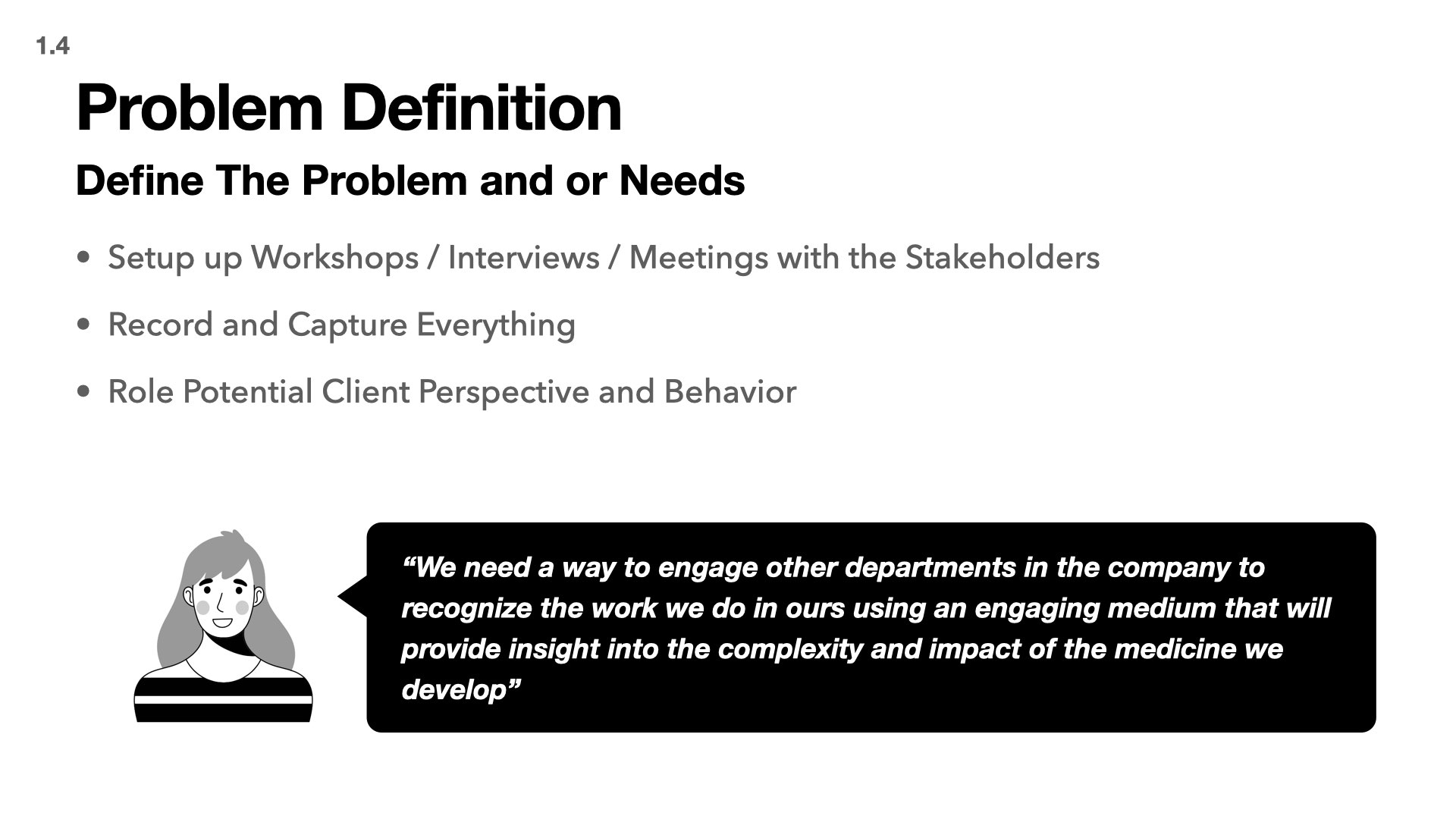
Problem-definition slide outlining stakeholder workshops and the need to communicate research
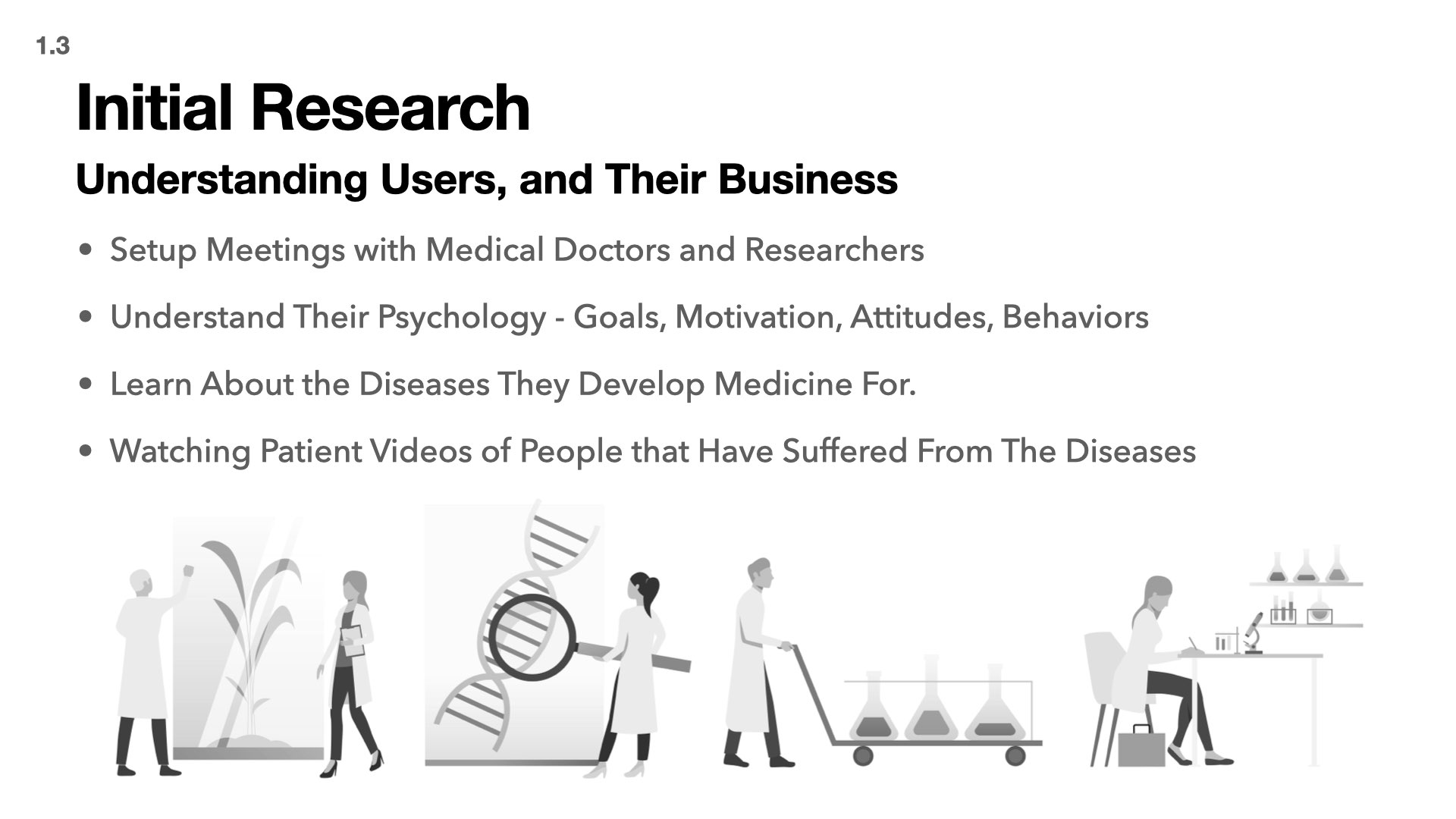
Initial research slide covering medical stakeholders, users, and disease education
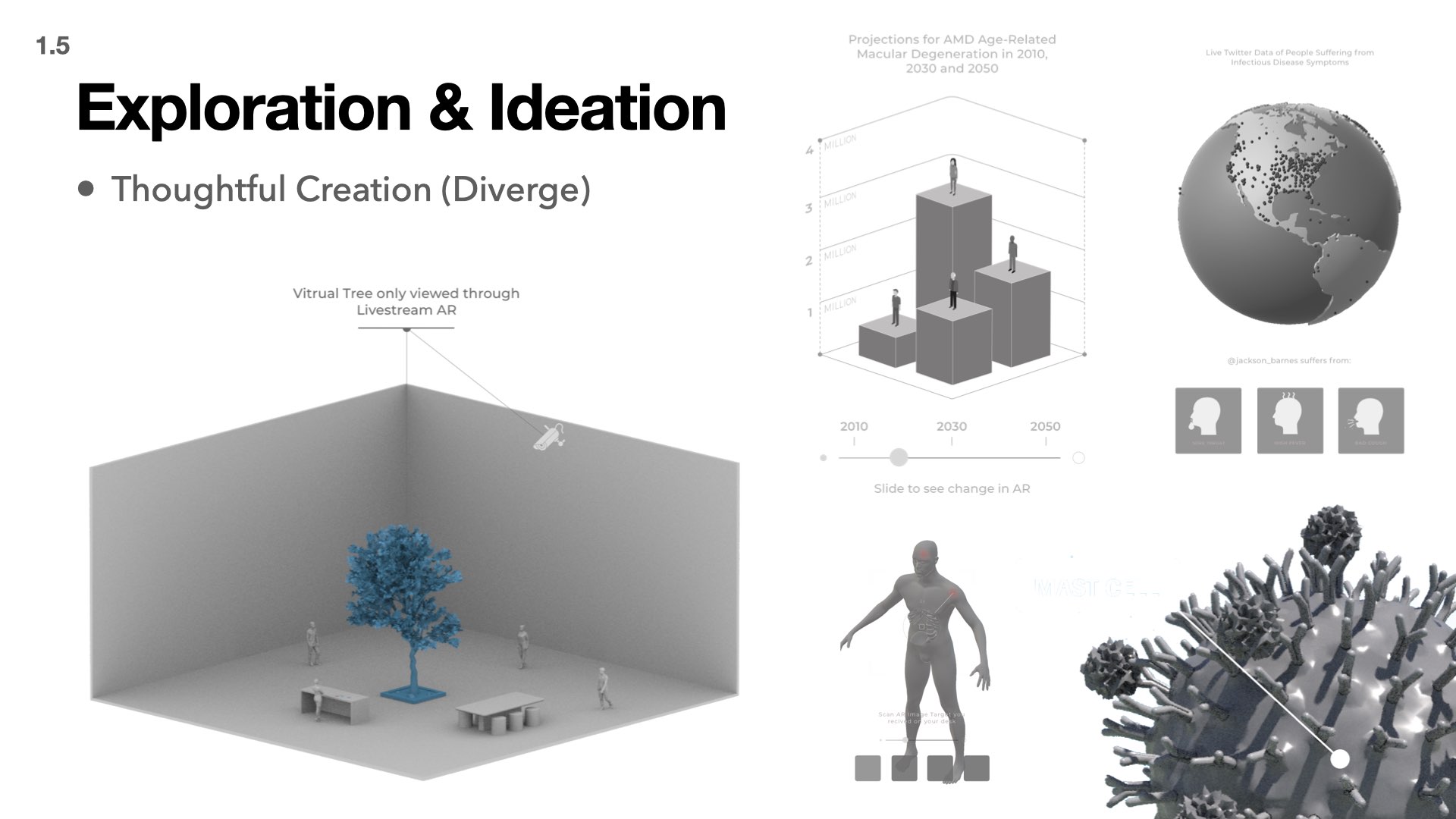
Exploration and ideation slide showing early AR content concepts
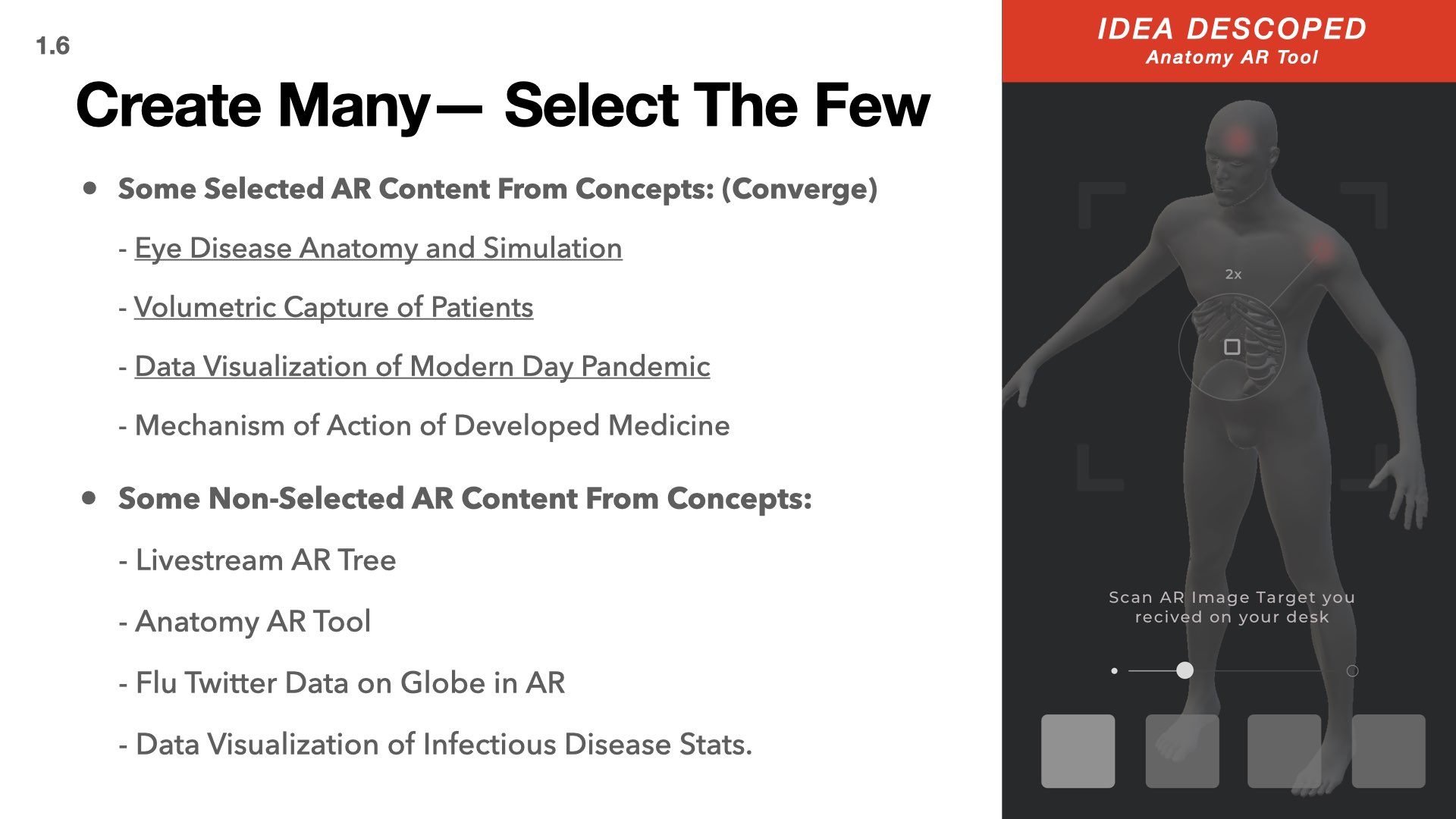
Concept-selection slide distinguishing selected AR content from ideas that were not pursued
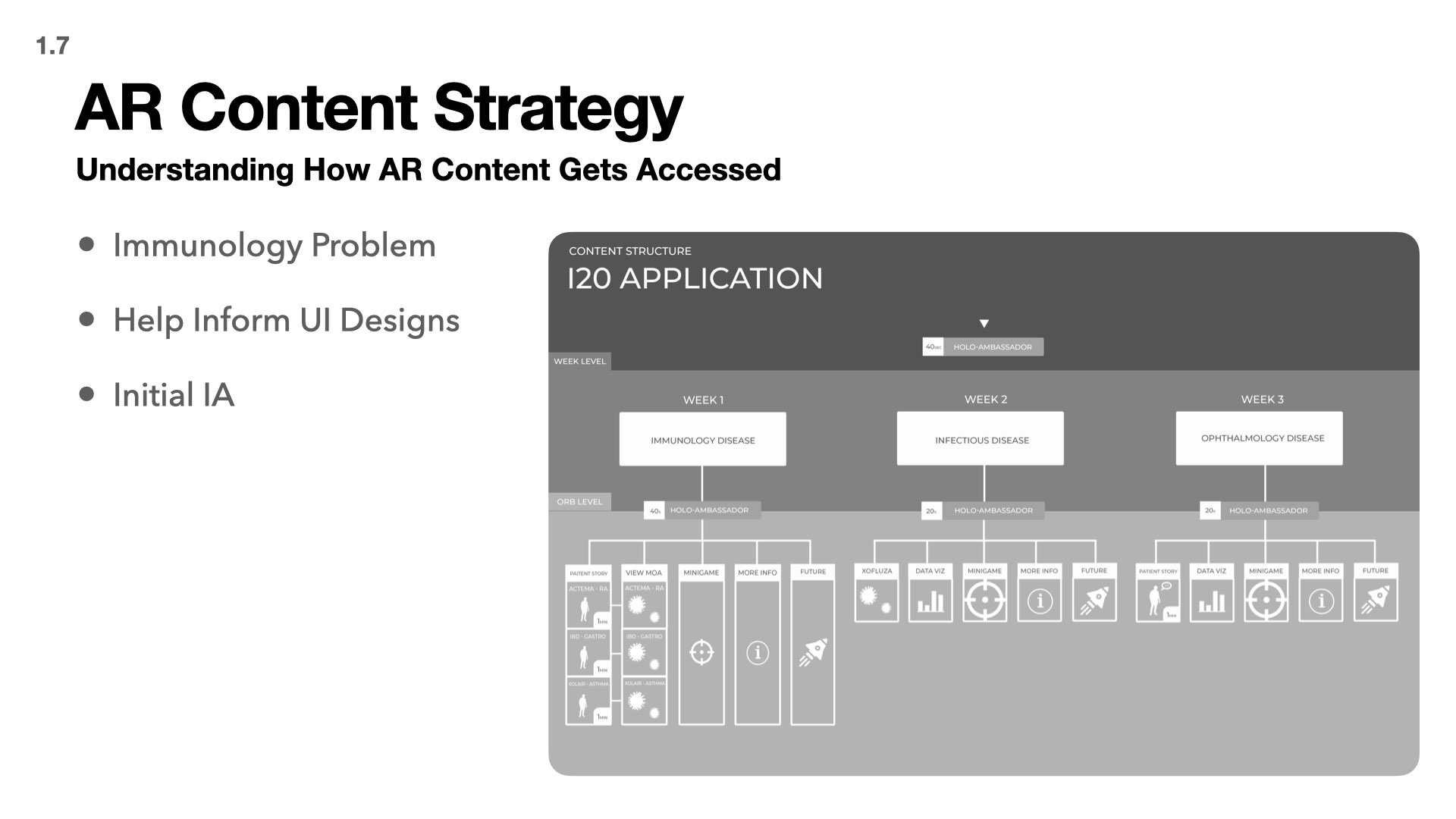
AR content strategy and application information-architecture diagram
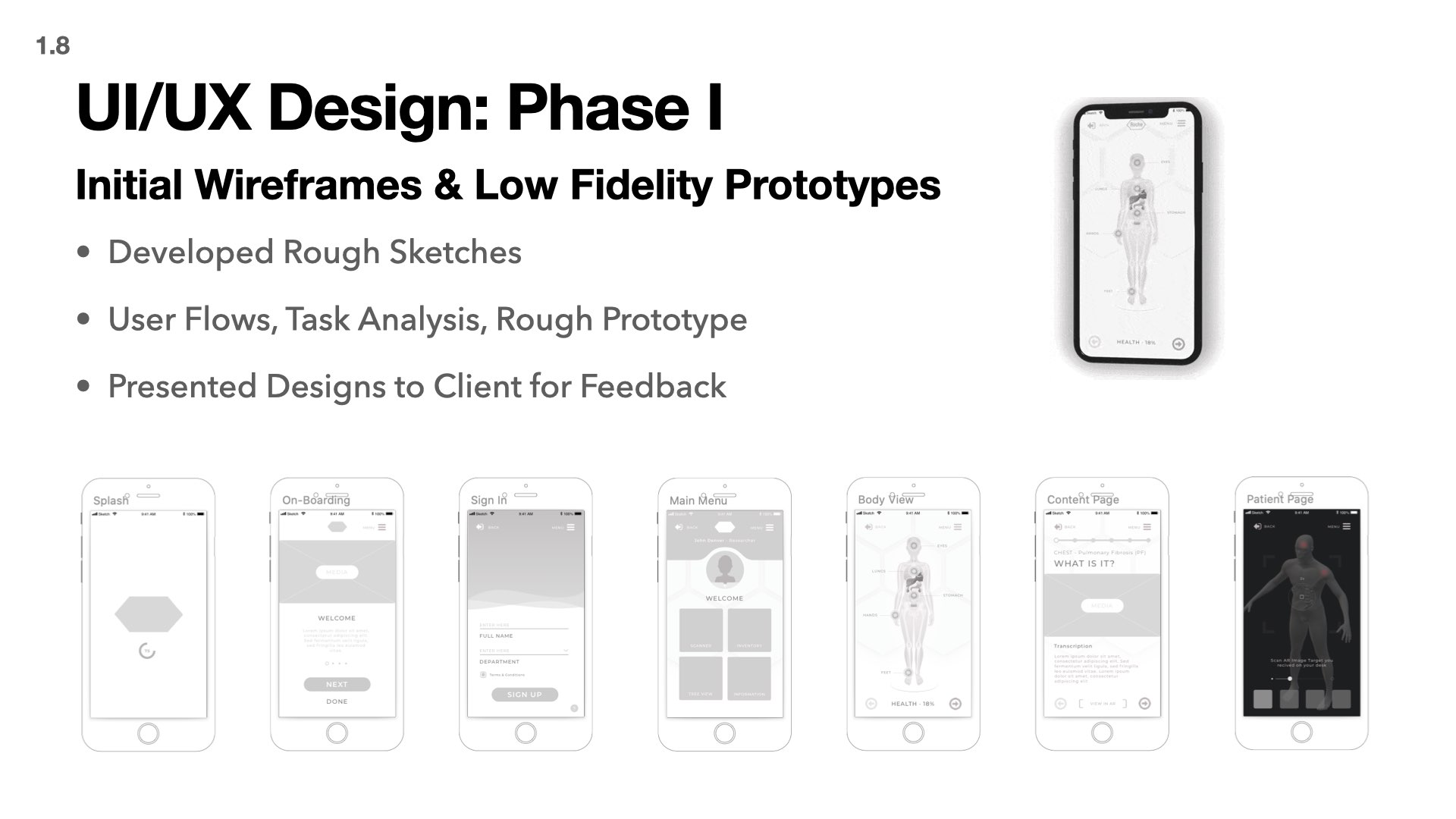
Initial mobile wireframes and low-fidelity interface prototypes
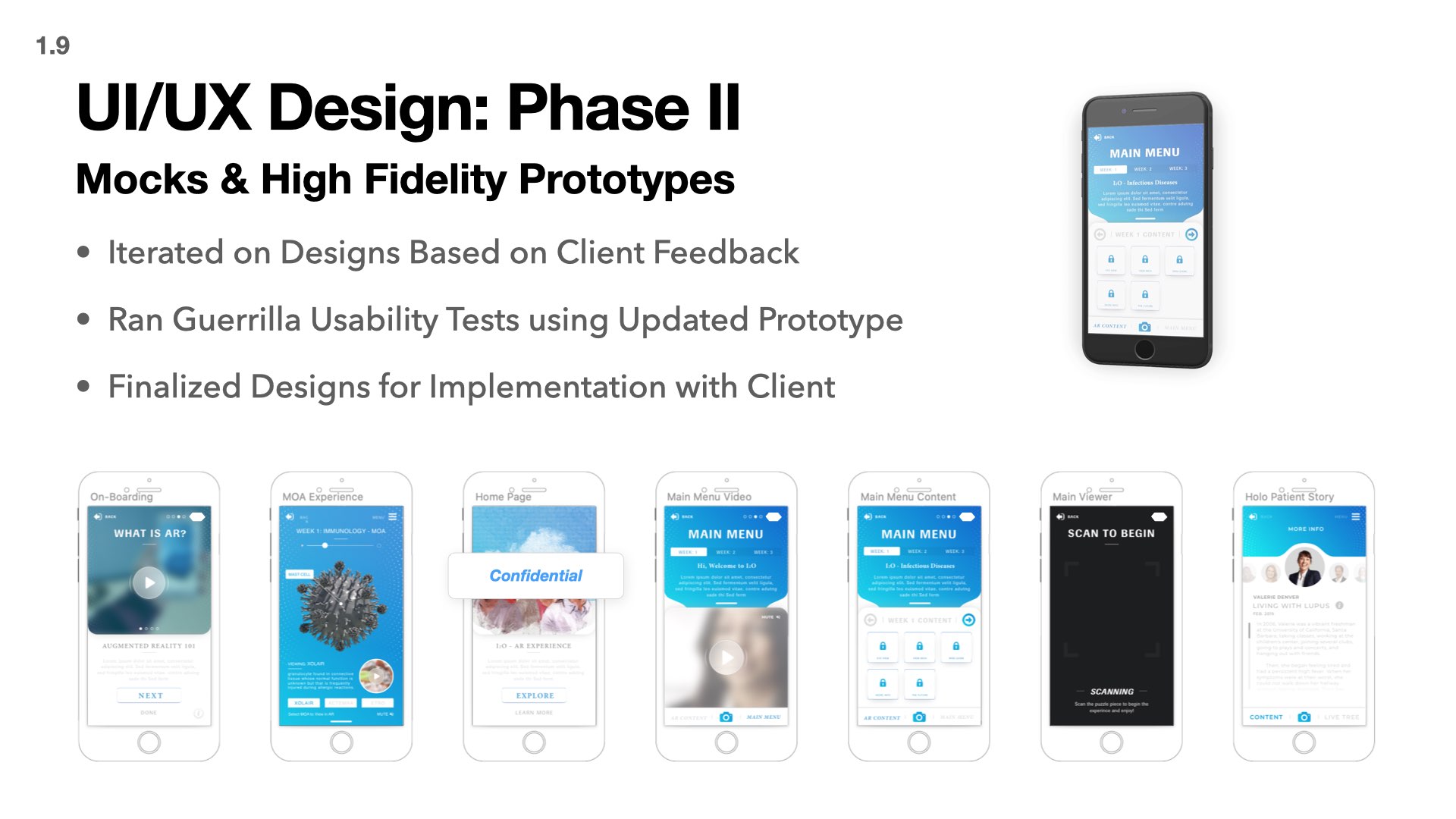
High-fidelity mobile interface designs and prototype iterations
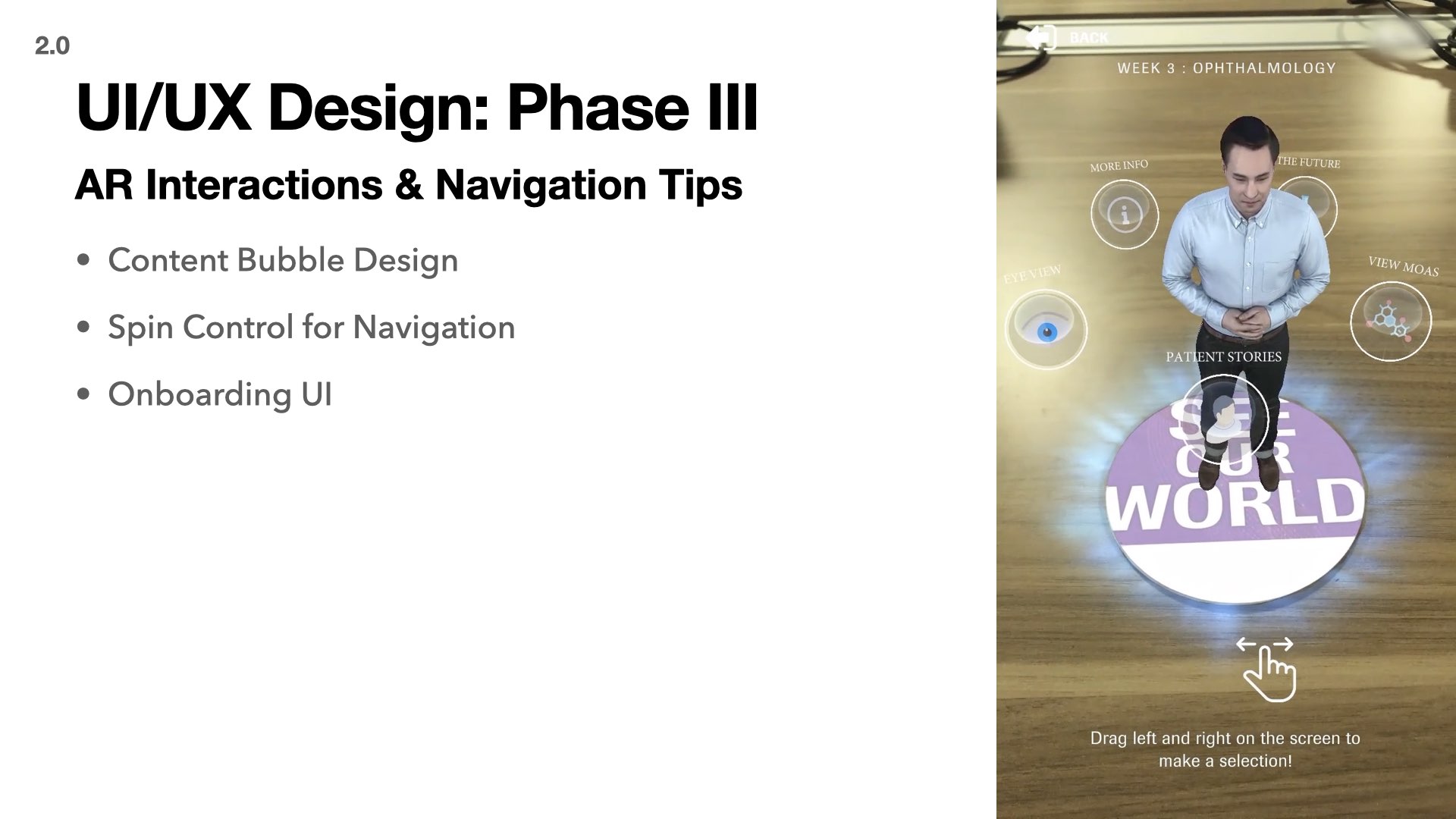
AR interaction and onboarding design with a volumetric person in the mobile view
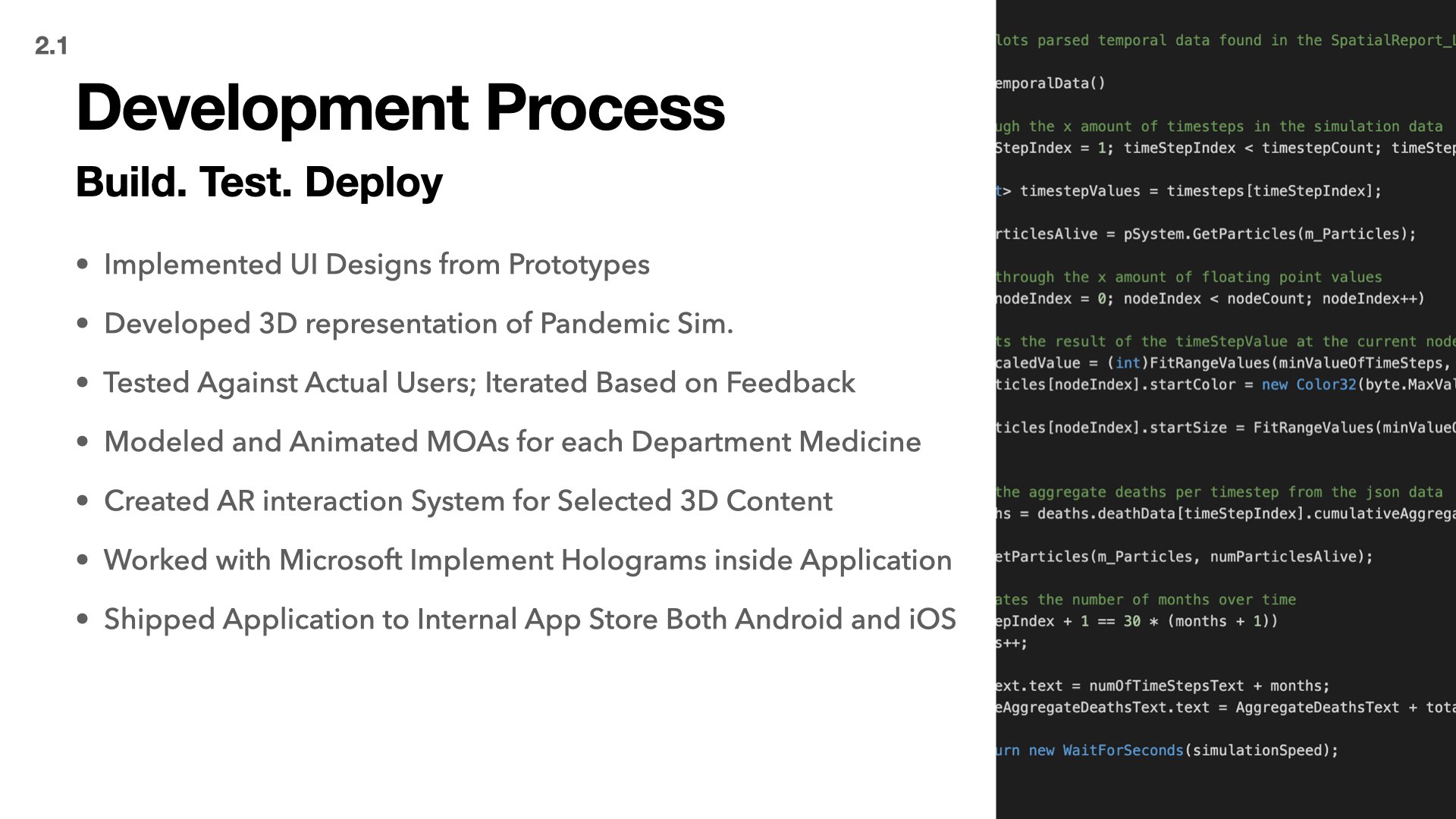
Development-process slide describing implementation, user testing, and internal app distribution
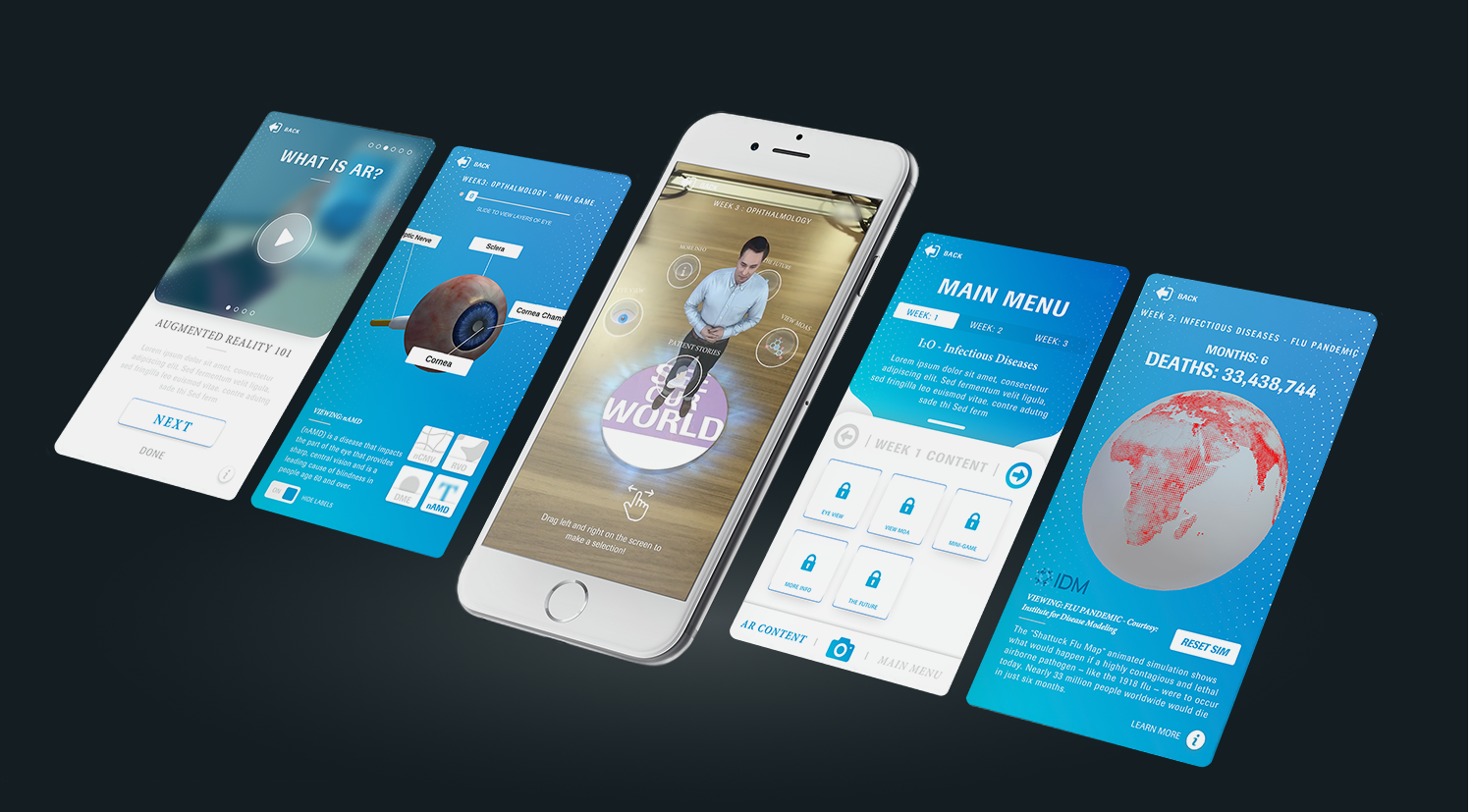
Application screens showing volumetric capture, an eye model, and disease-related spatial content
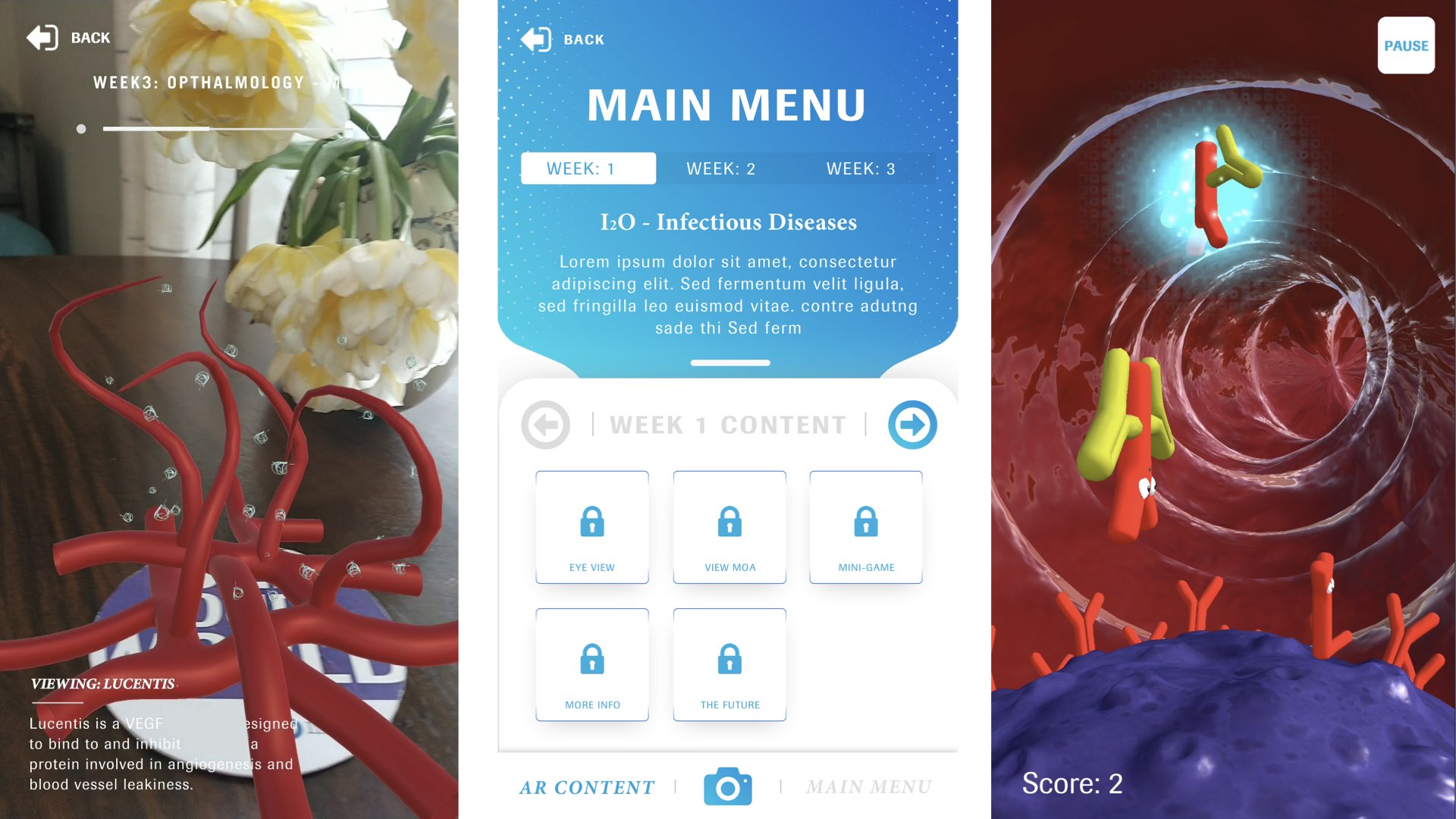
Application screens showing medical animations, the main menu, and an interactive experience
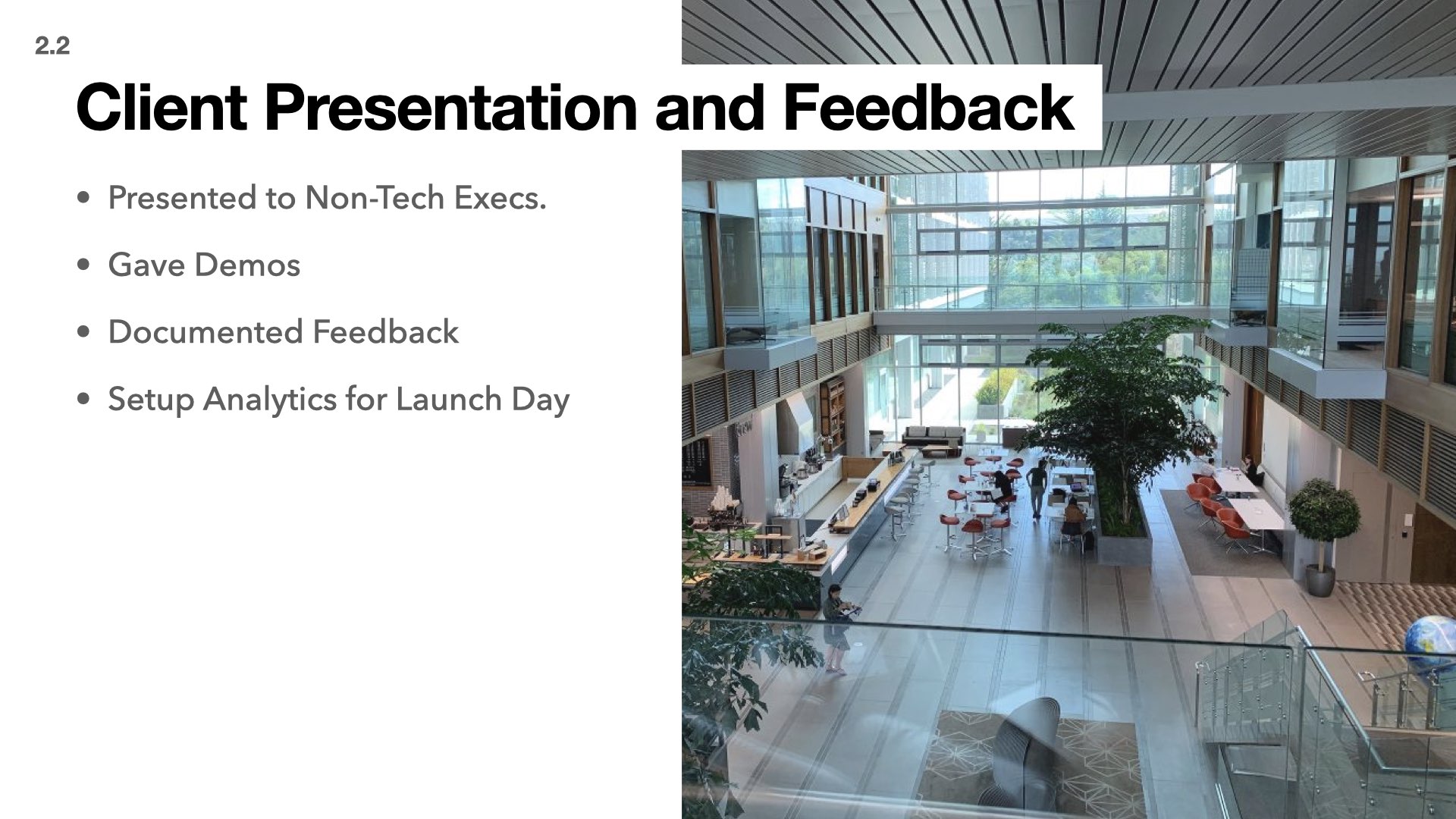
Client presentation and feedback slide with a photograph of the demonstration setting
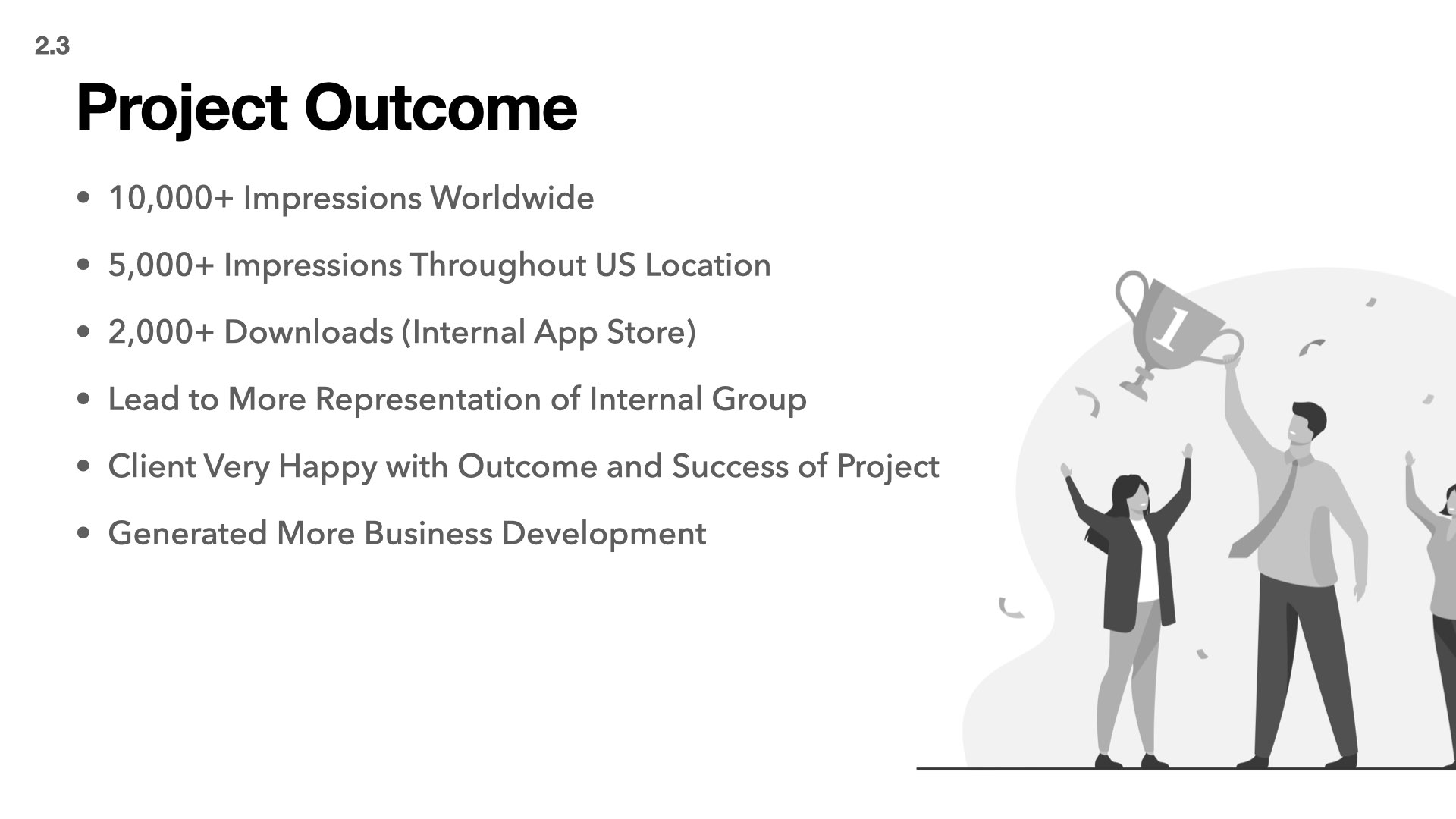
Project-outcome slide summarizing reach, internal downloads, and client feedback