
Handoff: Real-time AI Workspace
Handoff turns scattered knowledge, information, memories, conversations, sources, and otherwise lost AI context into a real‑time, machine‑readable workspace.
Role: Founder & Principal Design Engineer
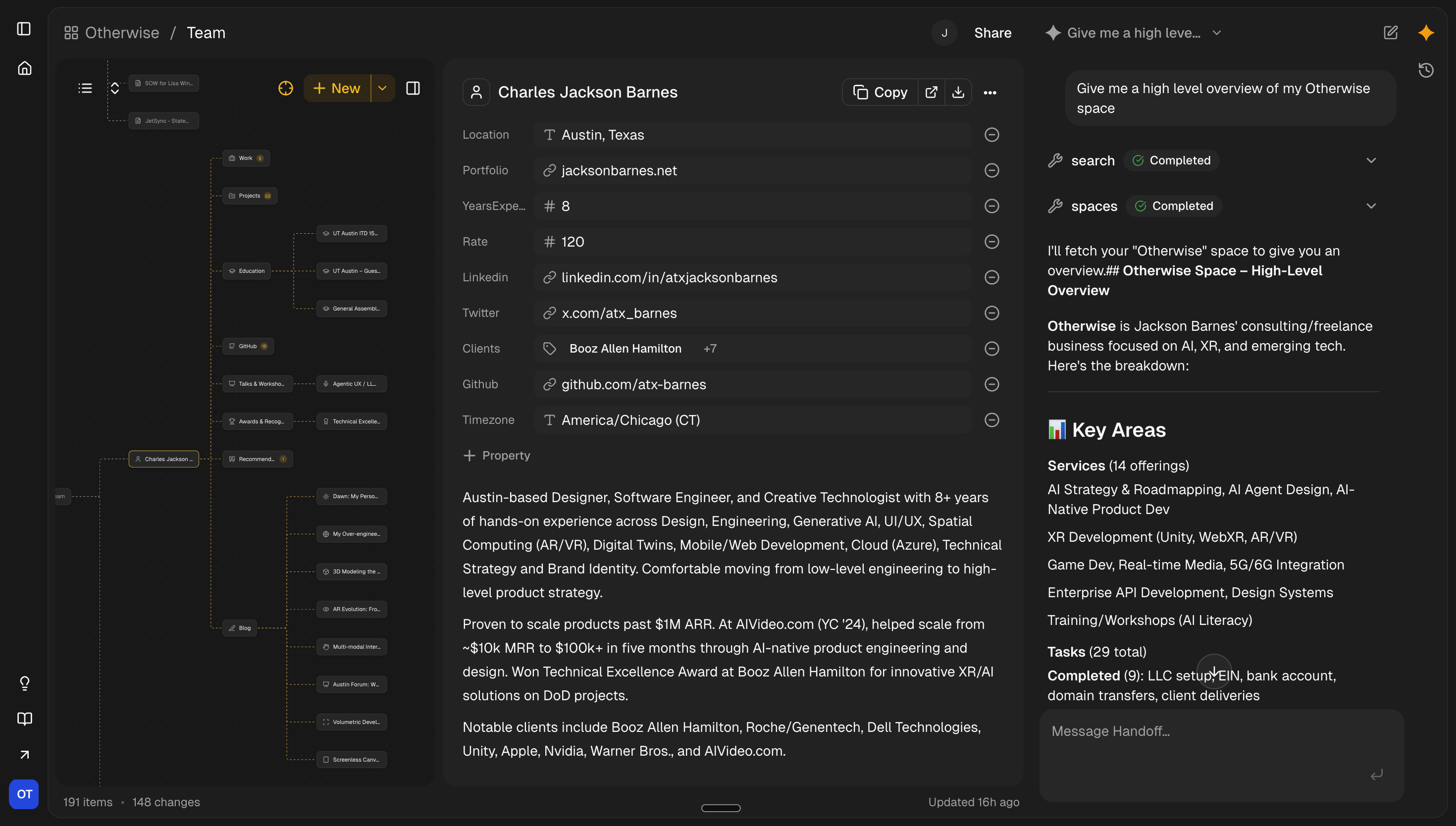
Check it out! 👉 https://handoff.computer
The Problem
AI is generating more knowledge than ever. And we're losing it faster than ever.
Every conversation with an AI produces insights, decisions, and context. But when the chat ends, it's gone. Locked in proprietary “memory” systems you can't inspect. Scattered across a dozen tools. Impossible to share with your team or your other agents.
Most AI memory is a black box. You put things in, you hope the right things come out. You can't see what's there, edit what's wrong, or share what's valuable. That's not memory. That's a lottery.
The Solution
Durable context for shared understanding. No more stale context. Handoff keeps your knowledge current and delivers exactly what each person and agent needs.
- Capture - Save knowledge, notes, and sources as structured items
- Organize - Connect items into graphs that reflect how ideas relate
- Track - Version history keeps everything auditable and reversible
- Share - Expose context to agents and teammates via MCP in real-time
Use Cases
- Agent memory: Assemble items and links to dynamically share context during agentic runs; capture and reuse results across sessions
- Structured docs and note taking: Organize living notes, outlines, and pages as linked items
- Collections and lists: Track tasks, references, bookmarks, or datasets grouped by relationship
- Research graphing: Capture notes and sources as items; relate authors, topics, and findings; make it instantly available to agents
Exploration
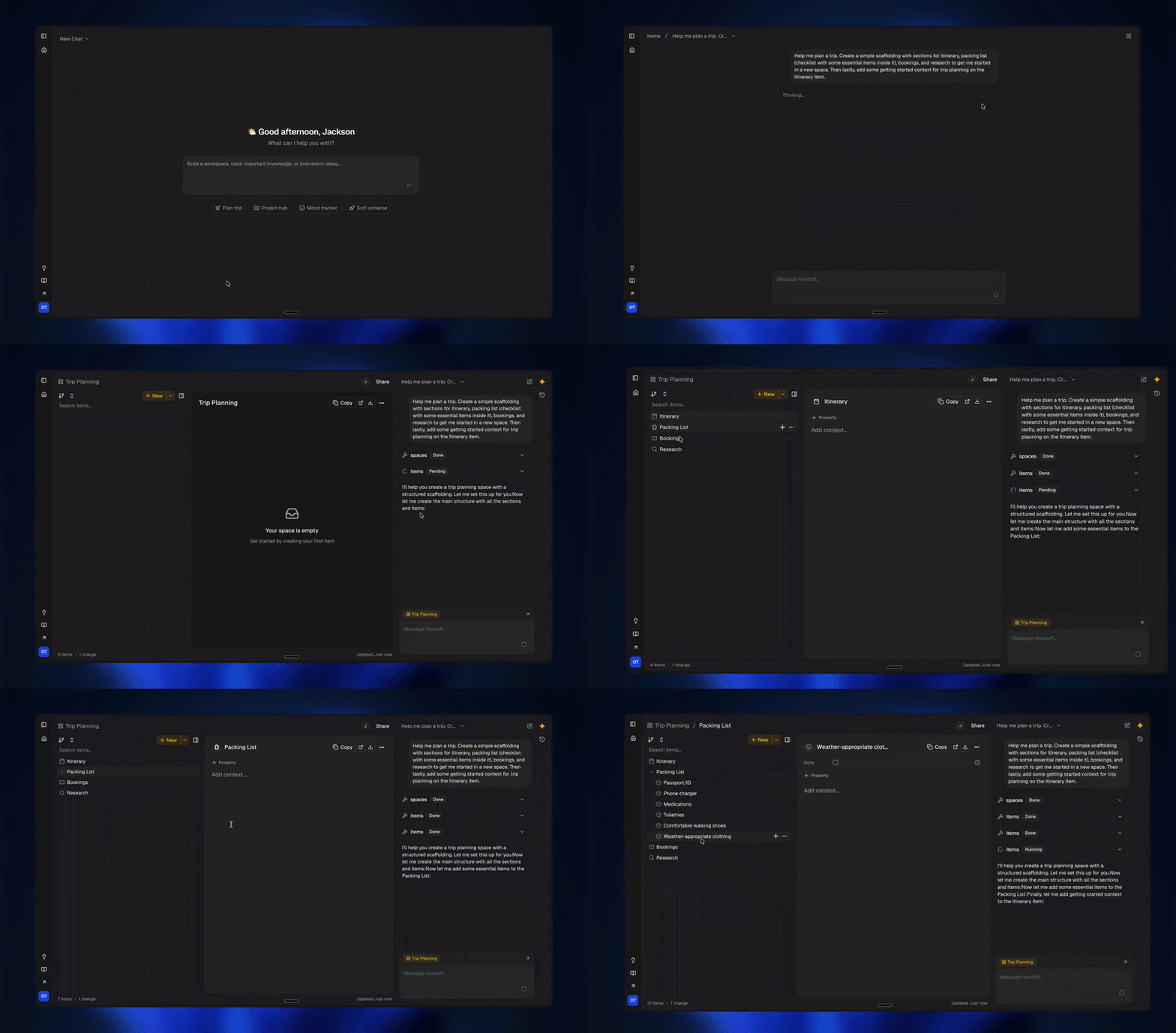
Early design exploration focused on making invisible context visible. The mockup works through how knowledge items connect, how agents and teammates navigate shared context, and how the workspace scales from a single note to a full project graph without losing clarity.
How it works
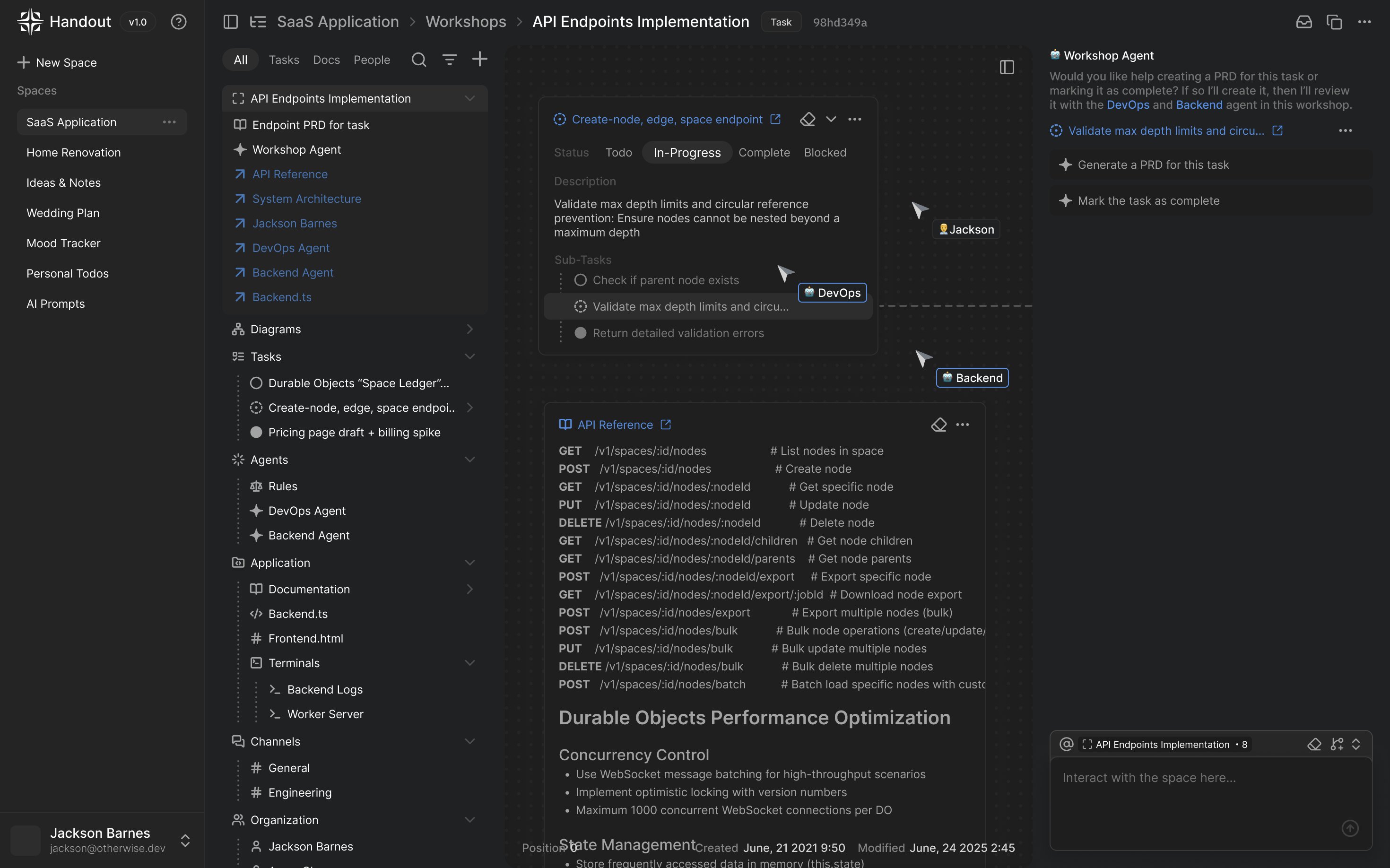
Handoff sits between your sources and your agents as the context layer, memory playground, and control plane. It works with your own agents using the Model Context Protocol (MCP) as the backplane-a deliberate choice so Handoff provides real value with your existing tools. Anything you do in the app you can also do via your own MCP client.
Handoff's presence system lets your UI follow along with what your agents are doing in real time. When agents create or update items and spaces, the API emits lightweight presence hints that the web app listens for, automatically selecting the targeted item or navigating to the relevant space. Presence events are scoped to your own user and agents only, never other users.